May or September, mostly. But it depends what you're coming for
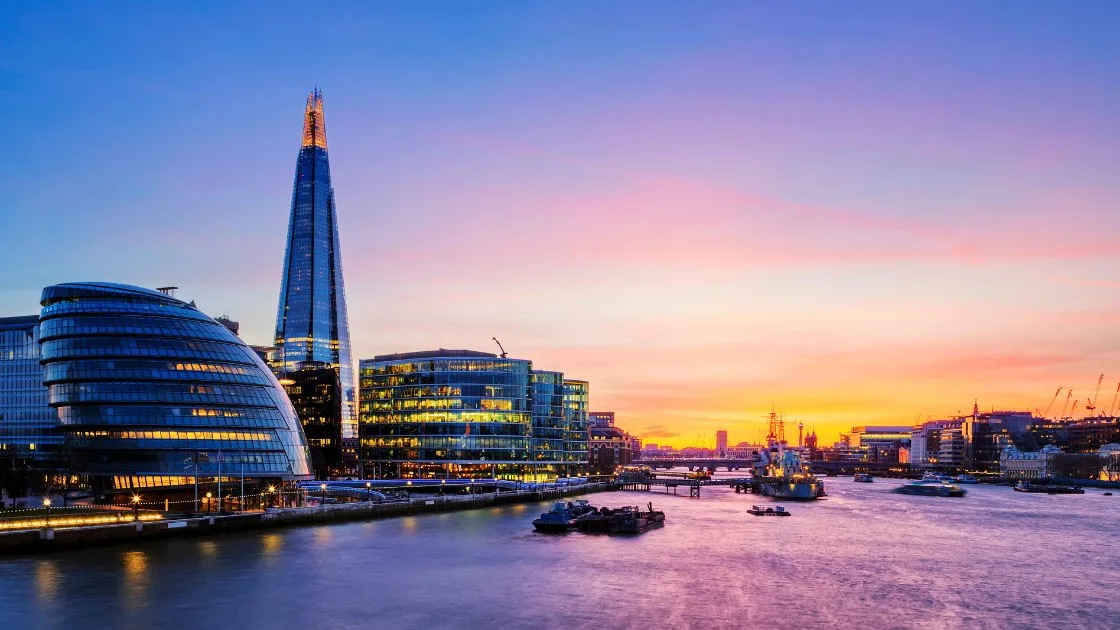
Ask most Londoners and they'll say May or September, for the long days, highs in the high teens and the absence of school-holiday crowds. Every month has its case, though, and the right one depends on why you're here, whether that's gardens, tennis, music, shopping or the Christmas lights.
Weather and daylight
London's weather is mild. July and August are the warmest months, with average highs of about 22°C, and January and February the coldest, when nights drop to a couple of degrees above freezing. There's no wet season as such, and rain turns up all year round; October is the wettest month and, oddly, March the driest.
What to watch is how many days it rains more than how much falls. January has plenty of damp ones, May and July noticeably fewer. A dry forecast here is a bonus rather than a promise, so pack an umbrella whatever the month.
Daylight makes a bigger difference than temperature. Round the June solstice the sun's up before 5am and doesn't set until after 9pm, while in late December it rises after 8am and it's dark before 4pm. A walk along the South Bank at 9pm in June is still in daylight, and in December the shop windows and street lamps are doing the work by mid-afternoon, so if long evenings on a terrace matter, come between May and August.
Spring and summer
April is still on the cool side, but May is properly pleasant, the parks are in blossom and the summer crowds haven't arrived. The RHS Chelsea Flower Show takes over the grounds of the Royal Hospital Chelsea for a week in late May. Tickets sell well in advance, and Chelsea's hotels and apartments fill that week too, so book both early. Easter holidays push up the museum queues for a fortnight, usually in April, but outside those weeks spring is the easiest time to see London without planning every hour.
Summer is the busiest and dearest season, and also the best for eating outside, riverside walks and Saturday mornings on Portobello Road, where the antiques stalls start trading early. Wimbledon runs for a fortnight from late June into July. The BBC Proms, eight weeks of classical concerts at the Royal Albert Hall, start in mid-July and finish in September, and for most concerts the standing Promming tickets are sold on the day.
Notting Hill Carnival takes over west London on the August bank holiday weekend. It's huge fun, and closes streets and stations across W10 and W11, so if you're staying nearby, know what you're signing up for. Air conditioning isn't standard in London buildings, and roughly half the apartments you'll look at won't have it, so check before you book for July or August.
Staying in London?
Search 155 serviced apartments, or ask a residence for its private direct rate.
Get the direct rate → or call 020 3790 7766
Autumn and winter
September is the quiet favourite: still warm, with schools back, the Proms winding up and a full theatre season starting. Open House Festival, usually in September, opens the doors of hundreds of buildings that are normally private, and the popular tours need booking the moment the programme comes out. By November it's chilly and damp, but the Christmas lights on Regent Street and Oxford Street go up in the first half of the month and the department stores unveil their windows.
December in the West End is expensive and crowded, and great fun anyway. Hyde Park Winter Wonderland runs from late November into early January. The New Year's Eve fireworks on the Thames are ticketed, and the tickets come out in batches in the autumn and don't hang about. For the busy weeks, book early; the good two- and three-bedroom apartments go first.
January and February are London's bargain months. They're the coldest and greyest, but restaurants are easier to book, the museums are calmer and apartment rates are often at their lowest of the year. If it's indoor culture at a fair price you're after, come then.
London weather by month
July is the warmest month, averaging 23°C by day. July has the fewest wet days (9) and October the most rain (80 mm). For sightseeing on foot, June scores best on our combined warmth-and-dryness measure.
| Month | Avg high | Avg low | Rain | Wet days | Chance a 7-day stay sees a washout | Record high / low |
|---|---|---|---|---|---|---|
| January | 8°C | 2°C | 74 mm | 13 | 53% | 16°C / -12°C |
| February | 8°C | 2°C | 51 mm | 10 | 43% | 18°C / -8°C |
| March | 11°C | 4°C | 45 mm | 9 | 44% | 23°C / -7°C |
| April | 14°C | 5°C | 54 mm | 10 | 44% | 26°C / -3°C |
| May | 17°C | 8°C | 54 mm | 9 | 39% | 30°C / -1°C |
| June | 20°C | 11°C | 58 mm | 9 | 35% | 34°C / 2°C |
| July | 23°C | 13°C | 52 mm | 9 | 34% | 34°C / 4°C |
| August | 22°C | 13°C | 68 mm | 9 | 37% | 37°C / 4°C |
| September | 19°C | 11°C | 62 mm | 9 | 39% | 29°C / 2°C |
| October | 15°C | 8°C | 80 mm | 11 | 47% | 27°C / -2°C |
| November | 11°C | 5°C | 76 mm | 12 | 52% | 18°C / -6°C |
| December | 8°C | 2°C | 69 mm | 12 | 50% | 16°C / -8°C |
Calculated NOAA GHCN-Daily observations at the Hampstead weather station, north London (records 1960–2015; averages from about 25 years per month). A wet day has 1 mm of rain or more.