First time in a serviced apartment? Here's how it actually goes
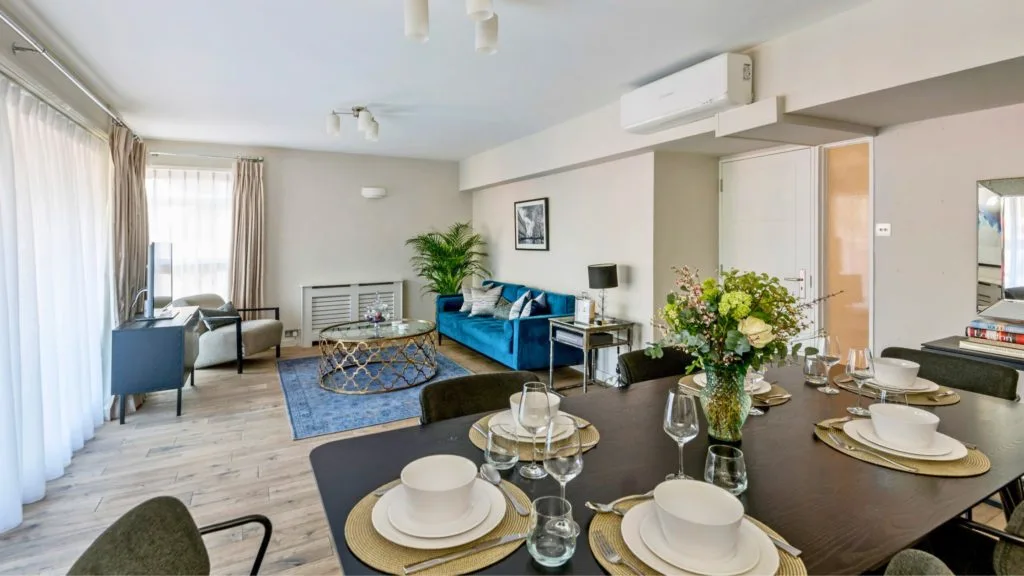
What usually catches first-timers out is the cleaning, because nobody comes in every morning. Serviced apartments work like a hotel at each end and a rented flat in the middle: you enquire, get a quote, pay, prove who you are and collect keys, then live in the flat with a cleaner coming on set days until you check out.
Enquiry, quote and payment
Give the residence your dates, the number of adults and children and how many bedrooms you need, then add anything that changes the answer, such as a cot, a dog, a car, an arrival after 10pm or a need for step-free access. If you can move by a day either way, say so, because it widens what the reservations team can offer. Through London Residency the form goes straight to the residence's own reservations team, so the reply comes from the people who will run your stay, and you deal with them from then on.
A proper quote gives the nightly rate and the total, says whether VAT is included, and sets out the cleaning schedule, deposit, cancellation terms and check-in and check-out times; if you get a single figure, ask for it broken down. The typical starting price across the residences we list is around £270 a night, but the headline number is only part of the story, since a slightly dearer flat with weekly cleaning included can end up level with a cheaper one that charges per visit. Ask about early check-in or a longer-stay rate now, not on arrival.
You pay the residence, not a middleman. Short stays are usually paid in full at booking or just before arrival, and longer stays are often invoiced weekly or monthly in advance. Read the cancellation clause before paying, because non-refundable rates are common and strictly applied. Most residences also take a refundable security deposit or put a pre-authorisation on a card to cover damage and unpaid extras, so ask how much and when it's released, bearing in mind that even after the residence releases a pre-authorisation your card issuer can take several working days to clear it.
ID, keys and the first hour
Expect to send a copy of the lead guest's passport or photo ID before arrival, and sometimes to show the card you paid with. A company booking for an employee may be asked for a letter of authority, and on longer stays you might sign a short licence agreement, in which case read the part about who is allowed to stay overnight.
If the building has a staffed front desk, as about half do, you pick up keys as at a hotel. Otherwise it's a key safe, a door code sent on the day or someone meeting you at the flat at an agreed time, and that last option needs a reliable arrival time, so share the flight number. Check-in is usually mid-afternoon, so if you land at 6am, arrange a bag drop or early access when you book. Spend the first hour walking round: photograph any damage, run the hot water, find the Wi-Fi password and the fuse box, and report anything wrong the same day, in writing.
Staying in London?
Search 155 serviced apartments, or ask a residence for its private direct rate.
Get the direct rate → or call 020 3790 7766
Cleaning and check-out
Cleaning is where it's least like a hotel. Daily servicing is the exception rather than the rule, and only a minority of residences even mention a maid service. Weekly or twice-weekly cleaning is common, with fresh linen and towels on the same visit, and you can usually book extra cleans for a charge. The cleaner does the flat, while the fridge and your washing-up stay yours, and if you're working from the apartment, agree a cleaning slot that won't land in the middle of a video call.
Check-out is usually late morning. Leave the flat tidy rather than cleaned by running the dishwasher, bagging the rubbish and putting the keys where you were told, after which the residence inspects and releases the deposit. A late check-out is easier to grant a week ahead than on the morning, so ask when you confirm the booking.