Who gets in, who's watching, and where your passport goes
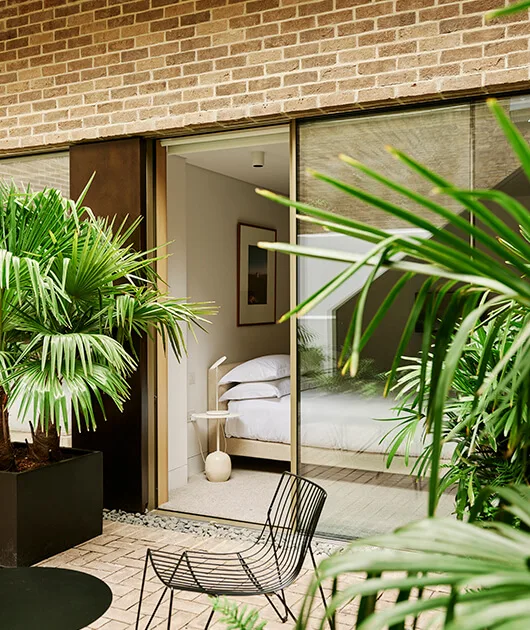
Be wary of any flat where the key lives in a lockbox on the railings. Keeping safe in a serviced apartment comes down to who can get through the front door, who's watching it, and where you leave your passport and laptop, and a well-run building will have an answer to all three before you've finished asking.
The door, the desk and the cameras
Controlled entry matters more than anything else. In a well-run residence the street door opens with a fob, a keycard or a code, there's a second lock on the apartment itself, and visitors are buzzed in or met at a desk rather than wandering in off the street and into a lift. Hotels work differently, with a lobby open to anyone and often the lifts too, whereas in a smaller apartment building with fewer residents a stranger in the corridor tends to stand out. When you book, ask how keys are issued and what happens if one goes missing. A building that re-codes a lost card the same day takes access seriously, and one that posts a spare to a lockbox doesn't.
A person at reception adds another layer. They see who comes and goes, take in parcels so nothing sits on a doorstep, and they're there if something goes wrong at night. About half the residences we list have one, but reception doesn't always mean round the clock: plenty of desks close in the evening and hand over to an on-call number, so if overnight cover matters, ask outright. Cheval Hyde Park Gate in Kensington, for one, says on its own website that its front desk is staffed 24 hours, which is the answer you're hoping for.
Cameras are common on entrances, lobbies and car parks, and some residences mention CCTV on their property pages. Find out what's covered and whether anyone watches it live or it's simply recorded; the street door and the lift lobby are the cameras that earn their keep, and nobody should expect or accept one inside the apartment. If CCTV is listed, ask how long footage is kept and who you'd talk to about reviewing it after a parcel goes missing, because a clear answer suggests somebody is actually running the system.
Ten minutes on the first evening
Inside the flat it's simple stuff, and worth checking on the night you arrive.
- A safe big enough for a laptop, not just a passport
- A chain or a spyhole on the apartment door
- Locks on the windows if you're on the ground or first floor
- The front desk or emergency number saved in your phone
- The route to the fire exits, walked once from your door
Staying in London?
Search 155 serviced apartments, or ask a residence for its private direct rate.
Get the direct rate → or call 020 3790 7766
Staff, floors and getting to the door
Serviced apartments tend to get longer stays than hotels, which means fewer arrivals and departures each day and staff who get to know residents by sight. That guarantees nothing, though it does make an unfamiliar face easier to spot. The flip side is fewer staff. A big hotel might have its own security team and a night manager, while a small residence might have one person on the desk, and only you can decide which you'd rather have.
Good staff also know when to say nothing. At a well-run residence nobody will confirm to a caller that you're staying, or send a visitor up without checking with you first. If that matters to you, as it might for a high-profile guest or anyone travelling privately, mention it when you book so the desk knows from day one.
Upper floors are less exposed, but if you ask for one, check there's a lift, because not every building has one and the stairs in old Georgian and Victorian houses can be steep. Off-street parking is rare in central London and very few residences have any, so if you're arriving with a driver or a hire car, ask where it can stop to unload and whether someone can meet you at the kerb. A few minutes' planning saves you standing on a busy pavement with your bags in one hand and your phone in the other. Getting home late is rarely a long trudge either, since nearly every residence with a known postcode is within about ten minutes' walk of a station.